7 Mistakes Accredited Investors Make with Diversification (And How to Fix Them)
- Technical Support
.png/v1/fill/w_320,h_320/file.jpg)
- Jan 16
- 5 min read
Diversification is one of those concepts that sounds simple until you actually try to do it right. Spread your money around, don't put all your eggs in one basket, we've all heard the advice a thousand times.
But here's the thing: most accredited investors think they're diversified when they're really not. Or worse, they've diversified themselves into a confusing mess that's actually hurting their returns.
After working with high-net-worth clients and institutional investors, we've seen the same mistakes pop up again and again. The good news? They're all fixable. Let's break down the seven most common diversification mistakes and how to course-correct.
Mistake #1: Under-Diversification (The Concentration Trap)
This one seems obvious, but it's surprisingly common among successful investors. You made your money in tech, so your portfolio is 70% tech stocks. Or you love real estate, so that's where most of your wealth sits.
The problem? Concentrating heavily in a single asset class, sector, or geography exposes your entire portfolio to catastrophic losses if that investment underperforms. Remember 2022 when tech stocks dropped 30%+? Investors who were overweight in that sector felt every bit of that pain.
The Fix: Spread your investments across genuinely different asset types, equities, fixed income, real estate, private equity, and yes, even digital assets like Bitcoin. At Mogul Strategies, we often recommend starting with a framework like the 40/30/30 model: 40% traditional equities, 30% alternative investments (including private equity and real estate), and 30% in innovative assets like institutional-grade crypto strategies. The exact split depends on your situation, but the principle is the same, real diversification means exposure to assets that don't all move together.

Mistake #2: Over-Diversification (The "Diworsification" Problem)
On the flip side, there's such a thing as too much diversification. Legendary investor Peter Lynch coined the term "diworsification" to describe what happens when you add so many investments to your portfolio that you're essentially just owning the entire market, but with higher fees and more complexity.
We see this a lot with investors who own 15 different mutual funds, 30 individual stocks, three REITs, two hedge funds, and a handful of ETFs. It feels like diversification, but when you look under the hood, there's massive overlap and no clear strategy.
The Fix: Adopt a core-satellite approach. Your "core" should be broad market exposure, think index funds or institutional strategies that give you baseline diversification. Your "satellites" are smaller, targeted positions in specific opportunities: a private equity deal, a real estate syndication, or a crypto allocation. Research shows that diversification benefits plateau after a certain point. Five to seven well-chosen, genuinely different investments often outperform a portfolio of 20 similar ones.
Mistake #3: Ignoring Asset Correlation (Especially During Downturns)
Here's a painful truth that catches a lot of investors off guard: asset correlations tend to spike during market downturns. Translation? The diversification benefits you're counting on tend to disappear exactly when you need them most.
During the 2020 COVID crash, stocks, bonds, real estate, and even many "alternative" assets all dropped together. Investors who thought they were protected learned that their supposedly uncorrelated holdings weren't so uncorrelated after all.
The Fix: Don't rely solely on historical correlations when building your portfolio. Stress-test your assumptions. Ask yourself: "If the market drops 30% tomorrow, how will each of my holdings actually behave?" Consider adding truly uncorrelated strategies, like managed futures, certain hedge fund approaches, or Bitcoin, which has shown increasingly unique correlation patterns compared to traditional assets. At Mogul Strategies, we specifically design portfolios with stress scenarios in mind, not just historical averages.

Mistake #4: Misjudging Your Risk Tolerance and Capacity
There's a difference between risk tolerance (how much volatility you can stomach emotionally) and risk capacity (how much volatility your financial situation can actually handle). Many accredited investors mix these up, or ignore them entirely.
We've seen 35-year-olds with 30-year time horizons investing like they're about to retire. And we've seen retirees chasing aggressive growth strategies because they're bored with bonds. Neither approach ends well.
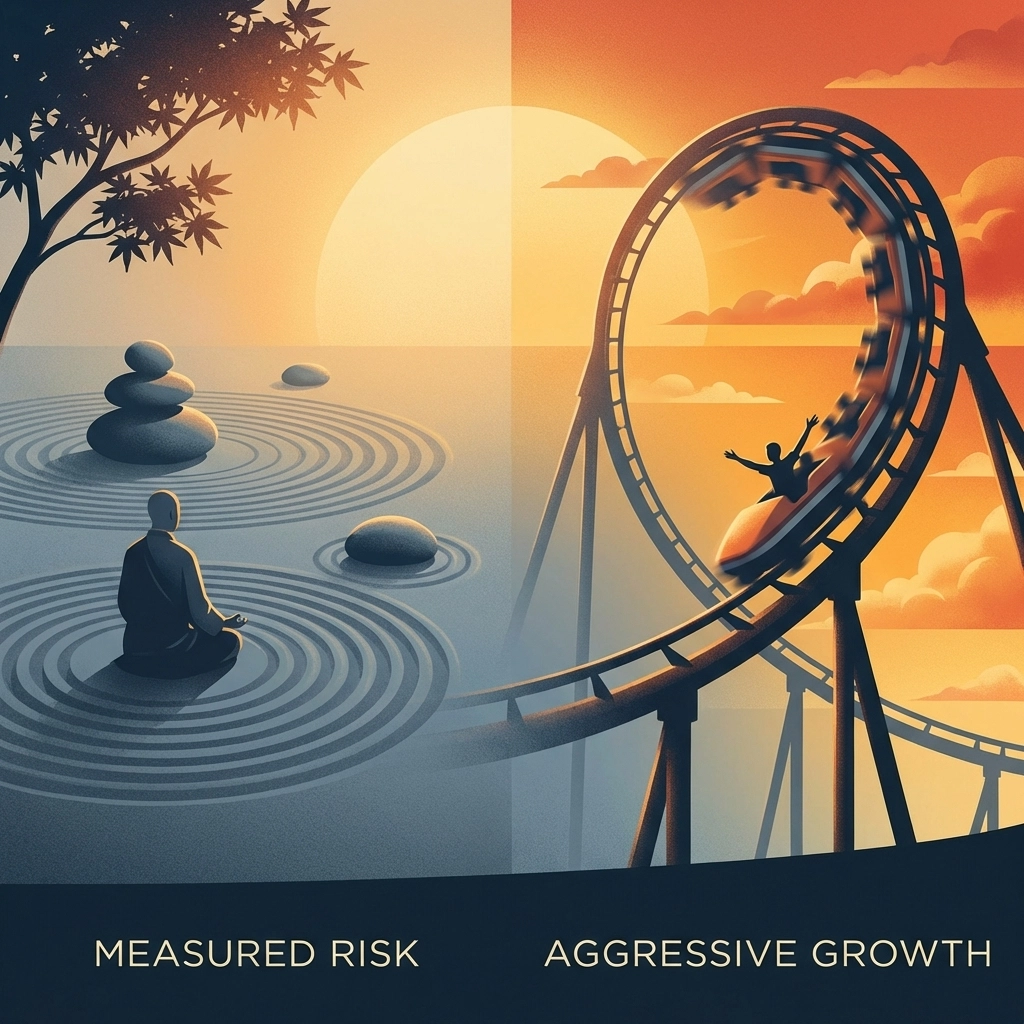
The Fix: Get honest about both your emotional and financial relationship with risk. If you have a short time horizon (say, you need the money in five years), even a "diversified" portfolio heavy in equities might be too aggressive. Conversely, if you're 45 with decades ahead and strong income, playing it too safe could cost you millions in long-term growth. Your diversification strategy should match both your psychological comfort level and your actual financial timeline.
Mistake #5: Holding Too Many Similar Investments
This is the sneaky cousin of over-diversification. You might own five different funds, but if they're all large-cap U.S. growth stocks, you don't actually have diversification: you have concentration dressed up as diversification.
It's surprisingly easy to fall into this trap. You own the S&P 500 index, a "growth" ETF, and a "quality" fund... but 60% of the holdings overlap. You're paying three sets of fees for essentially the same exposure.
The Fix: Audit your portfolio for overlap. Look at the actual holdings in each fund, not just the fund name or category. Consolidate where there's redundancy. Then deliberately seek out investments that fill gaps: maybe international exposure, small-cap value, private credit, or alternative strategies that genuinely behave differently from your core holdings.

Mistake #6: Emotional Investing Without Clear Goals
The allure of high returns can make even sophisticated investors abandon their diversification principles. When crypto was soaring in 2021, suddenly everyone "needed" more exposure. When AI stocks exploded in 2023, portfolios got rebalanced overnight to chase the trend.
Emotional investing leads to buying high and selling low: the exact opposite of what builds wealth.
The Fix: Establish clear, written investment goals before you invest a single dollar. What are you trying to achieve? When do you need the money? What level of volatility is acceptable? These questions should drive your diversification strategy, not headlines or FOMO. When a hot new opportunity appears, evaluate it against your existing plan: not against your fear of missing out. A good investment that doesn't fit your strategy is still a bad choice for your portfolio.
Mistake #7: Failing to Monitor and Rebalance
Diversification isn't a one-time event. Markets move, allocations drift, and suddenly your carefully constructed 40/30/30 portfolio is now 55/25/20 because equities had a great year.
Many investors set their allocation and forget about it: sometimes for years. By the time they check back, their risk profile has changed dramatically without them realizing it.
The Fix: Schedule regular portfolio reviews: quarterly at minimum, monthly if you're actively managing alternatives. Set rebalancing triggers: if any asset class drifts more than 5-10% from its target, it's time to rebalance. This discipline forces you to systematically sell high (trimming winners) and buy low (adding to underperformers), which improves long-term returns while maintaining your intended risk level.
The Bottom Line
Diversification mistakes are expensive, but they're fixable. The key is moving beyond surface-level thinking ("I own stocks AND bonds!") to genuine strategic allocation that accounts for correlation, risk tolerance, portfolio overlap, and your actual financial goals.
For accredited investors looking to blend traditional assets with innovative strategies like institutional-grade crypto and private equity, the opportunities have never been better: but neither have the potential pitfalls.
If you're ready to audit your current diversification approach or explore how a framework like the 40/30/30 model might work for your situation, reach out to Mogul Strategies. We specialize in helping high-net-worth investors build portfolios that are genuinely diversified( not just diversified on paper.)
Comments