Exclusive Investment Opportunities: 5 Things Accredited Investors Should Know About Crypto-Enhanced Portfolios
- Technical Support
.png/v1/fill/w_320,h_320/file.jpg)
- Feb 11
- 5 min read
The conversation around crypto has shifted dramatically. What was once considered experimental is now becoming table stakes for sophisticated portfolios. If you're an accredited investor still treating digital assets as optional, you might be missing the bigger picture.
Here's what's changed: institutional infrastructure has caught up with the opportunity. We now have spot ETFs, qualified custodians, and regulated investment vehicles that make crypto exposure feel less like the Wild West and more like... well, investing. The question isn't whether to allocate anymore: it's how much and through which vehicles.
Let's break down five essential things you should know about building a crypto-enhanced portfolio in 2026.
1. The 5-10% Allocation Is Now Standard Practice
Remember when a 1% crypto allocation was considered aggressive? Those days are gone. Leading asset managers now recommend 5-10% crypto allocations for most investor portfolios, and the reasoning is straightforward: the risk-reward profile has fundamentally improved.
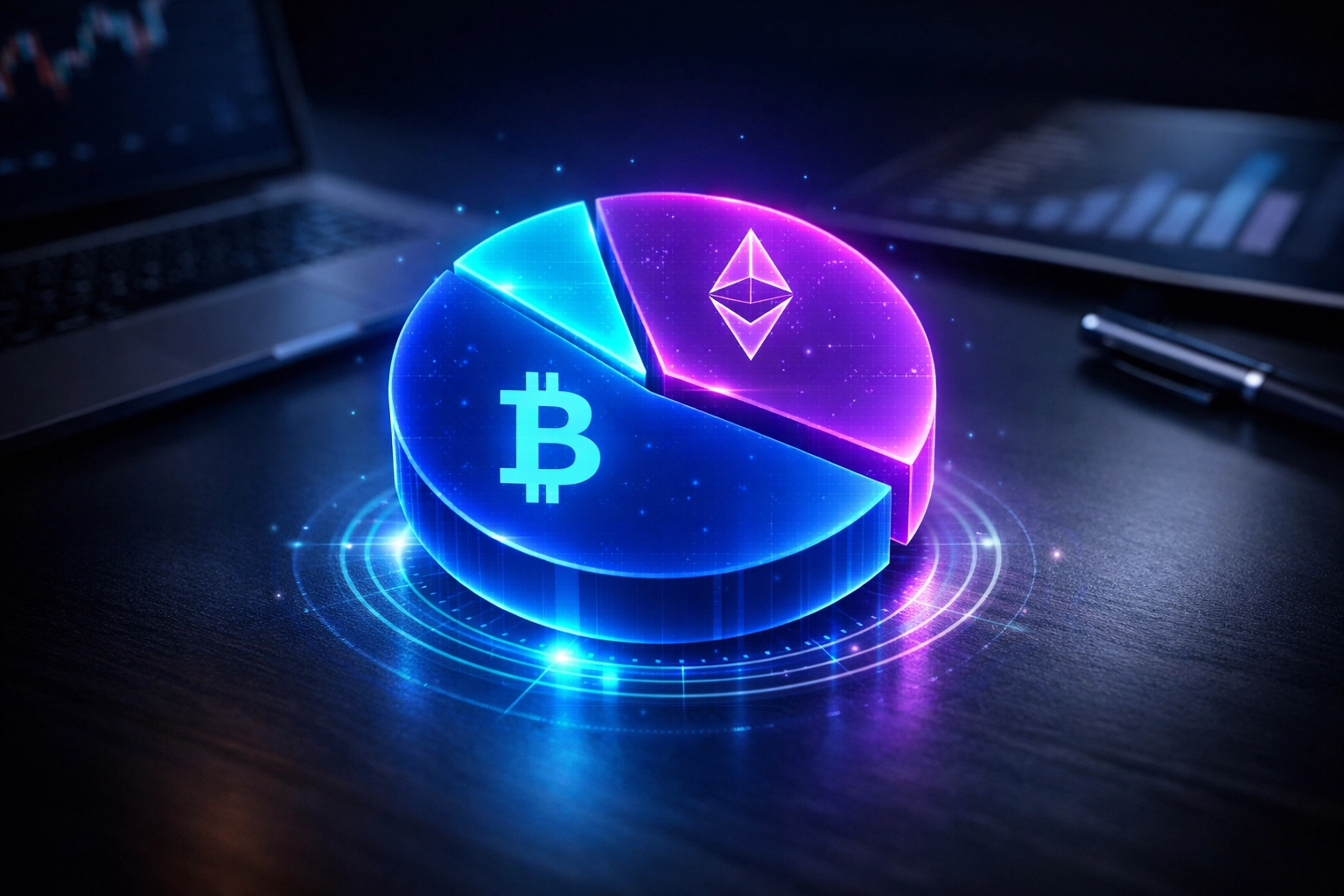
The institutional framework that's emerged uses what's called a core-satellite approach. Here's how it typically breaks down:
60-80% in Bitcoin as your stability anchor
15-25% in Ethereum for secondary exposure
5-10% in carefully selected altcoins for growth potential
This isn't about betting the farm on the next meme coin. It's about strategic exposure to an asset class that's shown remarkable resilience and adoption. Bitcoin's market cap now exceeds $800 billion with liquidity that rivals many traditional assets. Ethereum, sitting above $400 billion, offers additional utility through staking yields of 3-5% annually via liquid staking protocols.
The shift from 1% to 5-10% might seem subtle, but it represents a fundamental change in how institutional capital views digital assets: from speculative to strategic.
2. You Can Finally Access Crypto Through Familiar Channels
Here's the thing that's changed everything: infrastructure. You don't need to figure out cold wallets, self-custody, or navigate unregulated exchanges anymore. Institutional-grade infrastructure now exists that feels remarkably similar to traditional investment vehicles.
Spot Bitcoin and Ethereum ETFs trade on major exchanges. Qualified custodians hold assets with insurance and regulatory oversight. Derivatives markets provide hedging tools. This infrastructure development means you can gain crypto exposure through your existing brokerage relationship or investment platform.
For accredited investors specifically, this opens doors to more sophisticated structures. Private funds, separately managed accounts, and structured products all exist in the crypto space now. The operational complexity that once kept institutional capital on the sidelines? Largely solved.

The practical impact: you can build meaningful crypto exposure without becoming a blockchain expert or managing multiple unfamiliar platforms. That removes one of the biggest historical barriers.
3. Tokenized Real-World Assets Are the Next Wave
If Bitcoin was chapter one and Ethereum was chapter two, tokenization is chapter three: and it's just getting started.
The addressable market for tokenized real-world assets sits at $664 trillion. That's not a typo. We're talking about bringing traditional assets: treasuries, real estate, private credit, commodities: onto blockchain infrastructure. Current projections show growth from $36 billion today to approximately $400 billion in 2026.
Why does this matter for your portfolio? Because tokenization solves real problems:
Fractional ownership of previously illiquid assets
24/7 trading instead of market hours limitations
Reduced intermediaries and associated costs
Transparent settlement and ownership records
Major institutions aren't sitting this out. BlackRock, Franklin Templeton, and UBS are actively rebuilding financial infrastructure on blockchain. When institutions of this caliber commit resources, it signals genuine structural change rather than experimental innovation.
For accredited investors, tokenized assets create access to deals and asset classes that were previously restricted by minimum investment sizes or operational friction. A tokenized real estate deal might have a $50,000 minimum instead of a $500,000 minimum. That's meaningful diversification capability.
4. Bundled Platforms Are Simplifying Alternative Allocations
Here's a practical reality: managing exposure across multiple alternative asset classes traditionally meant multiple platforms, custodians, and reporting systems. That operational overhead limited diversification for many investors.

The solution that's emerged? Unified platforms that bundle crypto with other alternative investments in a single interface. Platforms designed for accredited investors now offer combined access to crypto, real estate, private equity, private credit, and other alternatives through one relationship.
This matters because:
Lower operational overhead managing a diversified alternatives portfolio
Consolidated reporting and tax documentation
Easier rebalancing across asset classes
Reduced minimum investments through fractional structures
Historical returns on these bundled platforms have averaged around 17% across projects: significantly above traditional asset class returns. The key advantage isn't just performance, though. It's the ability to build a comprehensive alternative allocation without becoming a full-time portfolio administrator.
Minimums typically range from $15,000 to $30,000 per investment, making meaningful diversification achievable without committing millions to alternatives.
5. Emerging Opportunities Require Operational Sophistication
The crypto space continues evolving rapidly, creating opportunities for investors willing to move beyond Bitcoin-Ethereum core holdings. But these opportunities require more active management and risk assessment.
AI-crypto convergence represents one emerging theme. The AI crypto market is projected to reach $10 billion as blockchains provide verification and coordination infrastructure for AI systems. This isn't speculative fiction: it's infrastructure being built today.
Multi-chain diversification is another consideration. While Bitcoin and Ethereum dominate institutional allocations, protocols like Solana, Avalanche, and Polygon offer different risk-reward profiles. These aren't replacements for core holdings, but they can provide exposure to emerging ecosystems.
Stablecoin integration has matured into a legitimate portfolio tool, not just a trading mechanism. Some sophisticated portfolios allocate 5-10% to stablecoins that generate yields through institutional DeFi products: typically 3-5% returns with different risk characteristics than traditional fixed income.
DeFi institutional products now exist that provide structured exposure to decentralized finance protocols through regulated vehicles. These products strip away the operational complexity while maintaining exposure to protocols generating real economic activity.
The critical point: these emerging opportunities exist, but they require operational sophistication to access safely. This is where working with asset managers who understand both traditional portfolio construction and crypto-native opportunities becomes valuable.
The Integration Advantage
The real opportunity in 2026 isn't choosing between traditional assets and crypto: it's integrating them strategically. A well-constructed portfolio can include public equities, fixed income, real estate, private markets, and crypto exposure in a coherent structure that manages correlation and risk appropriately.
At Mogul Strategies, we focus on exactly this integration: blending traditional assets with innovative digital strategies in portfolios designed for accredited and institutional investors. The goal isn't complexity for complexity's sake. It's building diversified portfolios that take advantage of structural shifts in how assets are created, traded, and managed.
If you're thinking about adding crypto exposure to your portfolio, the infrastructure and opportunities available today are dramatically better than even two years ago. The question is finding the right approach for your specific situation and risk tolerance.
Want to explore how crypto-enhanced portfolios might fit your investment strategy? Let's talk.
Comments