The Accredited Investor's Guide to Diversified Portfolio Strategies in 2026
- Technical Support
.png/v1/fill/w_320,h_320/file.jpg)
- Jan 18
- 5 min read
Let's be honest: the investment playbook that worked a decade ago isn't cutting it anymore. If you're still running a traditional 60/40 portfolio and wondering why your returns feel underwhelming, you're not alone. The market has changed, and so have the tools available to accredited investors.
2026 presents a unique landscape. We're seeing fading inflation, shifting interest rates, and index concentration that would make any risk-conscious investor nervous. The good news? There's never been a better time to rethink your approach and build something more resilient.
This guide breaks down the strategies that matter right now: from alternative investments to institutional-grade crypto integration. No fluff, just practical frameworks you can actually use.
Why the 60/40 Model Needs an Upgrade
The classic 60% equities, 40% bonds allocation served investors well for decades. But here's the problem: when both stocks and bonds move in the same direction during market stress (as we've seen recently), that "diversification" doesn't protect you the way it should.
For accredited investors with access to alternative assets, clinging to this outdated model means leaving returns on the table and accepting unnecessary risk.
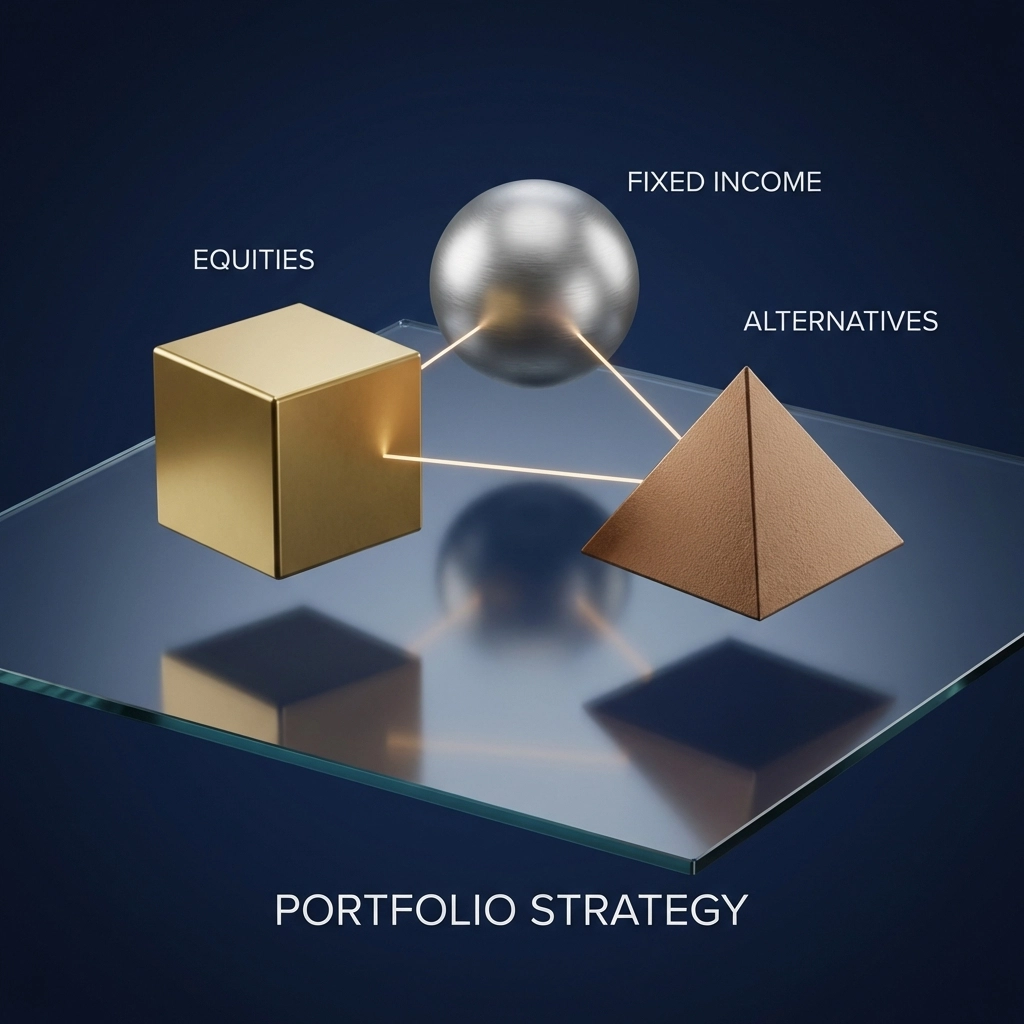
Enter the 40/30/30 framework: a modern approach that allocates roughly 40% to traditional equities, 30% to fixed income and credit strategies, and 30% to alternatives. This isn't a rigid formula, but rather a starting point for building true diversification.
The key shift? Moving from passive allocation to active, disciplined decision-making. In an environment with elevated market concentration, purely passive equity exposure may not efficiently use your risk budget.
Building Your Alternative Investment Foundation
Alternatives aren't just for mega-institutions anymore. As an accredited investor, you have access to opportunities that can fundamentally change your portfolio's risk-return profile.
Real Estate Syndication
Real estate remains one of the most reliable wealth-building tools available. But not all real estate investments are created equal. Here's how to think about it:
Income-Focused Strategies generate 8–12% yields with 2–5 year lockups. Multifamily syndications are the sweet spot here: they blend steady, inflation-resistant income with equity growth and moderate volatility. If you prioritize cash flow, this is your lane.
Value-Add and Development targets 18–25%+ IRR with 3–7 year lockups. Ground-up development creates value at the construction stage, offering capital appreciation that exceeds income-focused positions. Higher risk, but potentially transformative returns.
Preferred Credit Funds deliver 8–12% yields with meaningful downside protection through first-lien credit. Think of these as the middle ground: predictable cash flow with senior positioning in the capital stack.
The key is understanding where each investment sits in the capital structure. Senior debt, preferred equity, and common equity carry different risk-return profiles. Don't just chase yields: know what you own.
Private Equity Opportunities
Private equity offers access to growth that simply isn't available in public markets. Companies are staying private longer, which means the value creation happens before they ever hit the stock exchange.
For 2026, focus on sectors with secular tailwinds: healthcare technology, business services, and infrastructure. Manager selection matters enormously here: prioritize teams with proven track records across multiple market cycles, not just the recent bull run.

Integrating Digital Assets the Smart Way
Let's talk about the elephant in the room: Bitcoin and crypto.
Here's the reality: institutional adoption of digital assets isn't coming; it's here. The question isn't whether crypto belongs in a sophisticated portfolio, but how to integrate it without the volatility headaches.
The Case for Institutional-Grade Crypto Allocation
Bitcoin's correlation to traditional assets has decreased over time, making it a genuine diversification tool rather than just speculation. A 1-5% allocation can meaningfully improve risk-adjusted returns without dramatically increasing portfolio volatility.
The key is institutional-grade access:
Custody solutions with insurance and security infrastructure
Systematic rebalancing to capture volatility premiums
Tax-efficient structures that don't create accounting nightmares
At Mogul Strategies, we believe digital assets represent a paradigm shift in how value is stored and transferred. But we also believe in disciplined integration: not YOLO bets. The goal is capturing upside while maintaining the portfolio stability you need.
Hedge Fund Strategies for Risk Mitigation
Here's a stat that should get your attention: Equity-like strategies (ELS) have captured approximately 70% of equity market gains over 20 years while experiencing roughly half the losses during major drawdowns.
That's the power of combining offensive and defensive positioning.
Blending Strategies for All-Weather Performance
The most resilient portfolios combine multiple hedge fund approaches:
Long/Short Equity provides market exposure with downside protection through hedging. Good managers generate alpha on both sides of the book.
Trend-Following and Global Macro offer true diversification because they profit from market dislocation. When everything else is falling, these strategies often shine.
Alpha-Enhanced Equity tracks a benchmark while strategically taking active bets within pre-set limits. You get passive-like exposure with active-like returns: at lower costs than traditional active management.
The 2026 environment rewards flexibility. Static allocations won't cut it when central bank policies shift and market dynamics evolve rapidly.

Long-Term Wealth Preservation Framework
Diversification isn't just about maximizing returns: it's about protecting what you've built. Here's a framework that balances growth with preservation:
The Four Pillars
Income Stability – Allocate to preferred credit funds, multifamily income properties, and dividend-focused strategies. These provide cash flow regardless of market conditions.
Long-Term Growth – Value-add real estate, private equity, and equity-like hedge fund strategies capture appreciation over time.
Volatility Hedging – Trend-following, global macro, and tail-risk strategies protect against the unexpected. Think of this as portfolio insurance.
Liquidity – Active ETFs and publicly traded REITs ensure you can access capital when needed. Don't lock everything up.
Stress-Testing Your Assumptions
One of the biggest mistakes we see? Investors relying on best-case projections. Model conservative conditions: lower rents, higher expenses, wider exit cap rates: and see if your portfolio still works.
If your strategy only succeeds in perfect conditions, it's not a strategy. It's a hope.
Active Management in a Changing Landscape
The shift toward active management isn't just philosophical: it's practical. Active ETFs have seen 46% annual growth since 2020, reflecting investor confidence in dynamic positioning.
For fixed income specifically, active strategies are increasingly important as interest rate dynamics evolve. Focus on income opportunities in harder-to-access segments: high-yield credit, emerging market debt, and flexible credit strategies that can adapt as public-private credit markets shift.
The bottom line? 2026 rewards investors who embrace disciplined diversification, quality operator selection, and the flexibility to adapt. The old rules don't apply anymore.
Your Next Steps
Building a truly diversified portfolio isn't something you do once and forget. It requires ongoing attention, periodic rebalancing, and access to opportunities most investors never see.
That's where working with specialists matters. At Mogul Strategies, we blend traditional assets with innovative digital strategies to help accredited investors build portfolios designed for today's reality: not yesterday's assumptions.
The 2026 investment landscape is complex, but it's also full of opportunity. The question is: are you positioned to capture it?
Comments