The Accredited Investor's Guide to Private Equity Diversification in 2026
- Technical Support
.png/v1/fill/w_320,h_320/file.jpg)
- Jan 17
- 5 min read
Look, if you've been investing in private equity the same way you did five years ago, we need to talk. The landscape has shifted dramatically, and the old playbook of simply picking a few PE managers based on past returns isn't cutting it anymore.
2026 is shaping up to be a year where smart diversification separates the winners from everyone else. With AI disruption reshaping entire sectors and policy uncertainty keeping everyone on their toes, accredited investors need a more sophisticated approach to building PE exposure.
Let's break down what's actually working right now.
The New Way to Think About PE Returns
Here's something that's changed my perspective entirely: we're moving away from looking at total returns as a single number and toward understanding how those returns are generated.
Think of it as component-based return analysis. Instead of just seeing that a manager delivered 18% IRR, you can now dig into whether that came from revenue growth, margin expansion, leverage, or multiple arbitrage. Why does this matter? Because it tells you what you're actually betting on.
A manager who generates returns primarily through financial engineering behaves very differently than one who drives genuine operational improvements. When markets get choppy (and they will), those operational value creators tend to hold up better.
This disaggregation of returns lets you build a portfolio that's genuinely diversified: not just across managers, but across the actual sources of return.

Manager Selection: Go Deep, Not Wide
Here's a stat that surprised me: specialized funds are outperforming generalist funds by roughly 200 basis points. That's not a rounding error: it's a meaningful edge.
The temptation is always to diversify across lots of managers to spread risk. But the data suggests a different approach: concentrate your expertise in subsectors where you can develop genuine insight, then find the best operators within those areas.
What does this look like in practice?
Build a performance-persistence matrix. Track how your managers sustain results across different vintage years. A manager who crushed it in 2019 but struggled in 2022 might have been riding market tailwinds rather than generating real alpha.
Conduct value-creation audits. For realized deals, separate what came from the manager's operating improvements versus what came from favorable market conditions. This is the single best predictor of future performance.
Focus on repeatable processes. The best managers have systematic approaches to identifying opportunities and creating value. One-hit wonders are everywhere; find the operators who can do it consistently.
Strategic Access Mechanisms
Once you've identified strong managers, the question becomes: how do you scale exposure to their best opportunities without concentrating risk?
Two mechanisms are particularly valuable in 2026:
Co-investments let you participate in high-conviction deals alongside your fund investments, often with reduced or no fees. When a manager you trust is putting extra capital into their best opportunities, that's a signal worth acting on.
Separately managed accounts (SMAs) give you more control over portfolio construction and can provide enhanced transparency into underlying holdings. They're not for everyone: minimum commitments are substantial: but for larger allocators, they're worth exploring.
On the liquidity side, secondaries, continuation vehicles, and NAV financing have become sophisticated tools for managing cash flows. Just make sure you understand the full cost structure and any potential conflicts before diving in.

Vintage Year Diversification (Don't Try to Time It)
I see investors constantly trying to time their PE commitments: pulling back when markets feel frothy, piling in when things look cheap. The problem? It rarely works.
Here's the math that changed my thinking: if you reduce PE exposure now, you're effectively trading lower-multiple private businesses for higher-multiple public equities. And if you avoid recent vintages, you end up overweighting the 2021-2022 entry years: which were, let's be honest, not the best entry points.
The better approach is maintaining steady allocation across vintage years. This reduces both timing risk and exit clustering risk. It's not exciting, but it works.
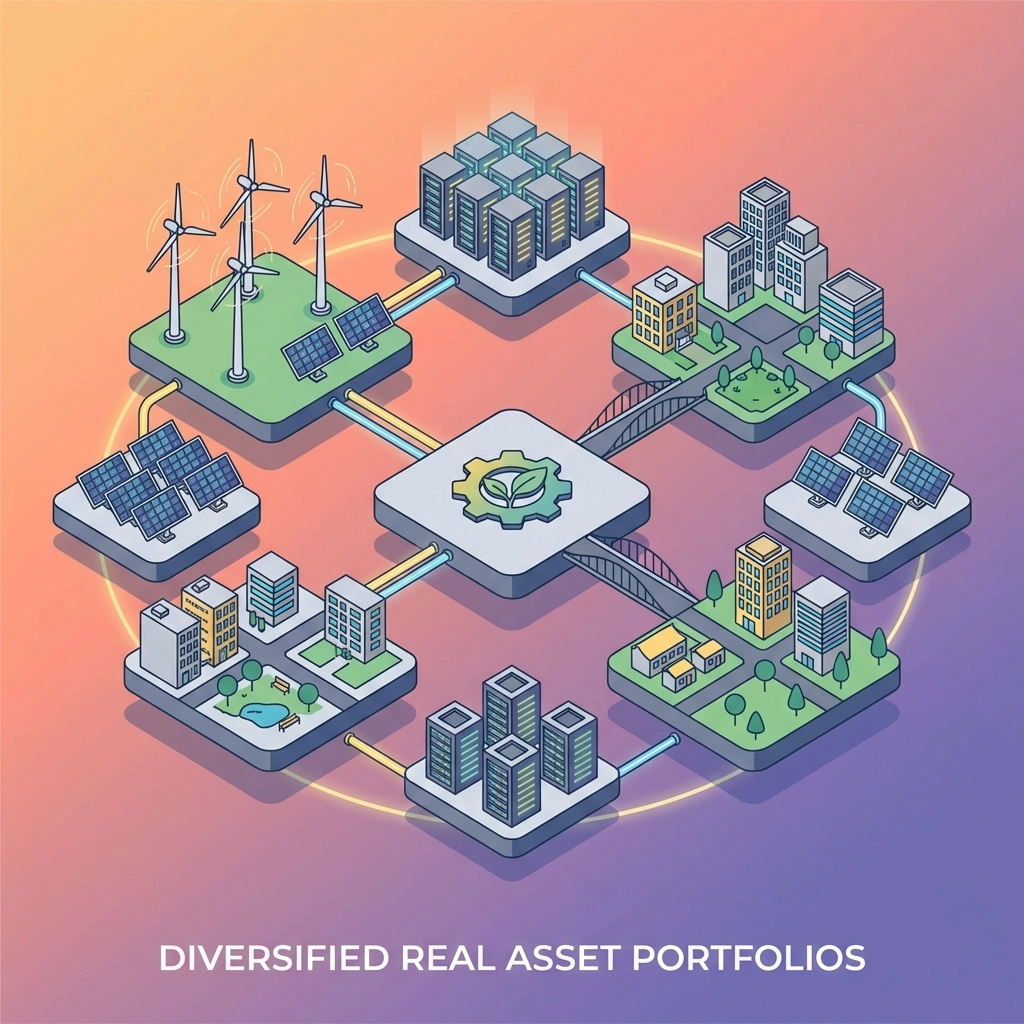
Beyond Traditional PE: Real Assets
Private equity is just one piece of the alternative investment puzzle. In 2026, real assets deserve serious attention: but with some important caveats.
Focus on secular themes. Digitalization, decarbonization, and demographics are driving long-term demand for specific infrastructure and real estate categories. Data centers, renewable energy, senior housing: these aren't trendy bets, they're structural tailwinds.
But valuations have risen. So much capital has chased these themes that passive exposure no longer cuts it. You need value-add managers who can actually develop projects and create returns, not just buy and hold.
Infrastructure secondaries are interesting. They provide immediate access to cash-flowing assets, often at modest discounts. Real estate secondaries can offer even better discounts for fundamentally sound assets: worth exploring if you can handle the complexity.
One specific tip on infrastructure: when evaluating data center deals, prioritize long-term contracts with creditworthy hyperscalers. The speculative short-term arrangements might offer more upside, but the risk profile is completely different.
Hedge Funds as Portfolio Insurance
This might seem off-topic in a PE guide, but hear me out: hedge fund strategies can complement your PE exposure in ways that strengthen your overall portfolio.
Equity long/short managers are particularly well-positioned for 2026's environment of high dispersion and low correlations. Over the past 20 years, these strategies have captured roughly 70% of equity market gains while losing only half as much during major drawdowns.
Combine that with defensive strategies like trend-following and global macro, and you've got meaningful downside protection while maintaining upside participation. When your illiquid PE positions can't be adjusted, having liquid hedges becomes even more valuable.
Geographic Diversification Done Right
U.S. tech still makes sense given AI leadership, but don't ignore regions offering similar exposure at more attractive valuations. The macro environment in 2026: with easing monetary conditions and fiscal stimulus across major economies: is creating genuine cross-regional opportunities.
The key is building robust operational due diligence across geographies. Different regulatory environments, tax structures, and transparency standards require different approaches. And always maintain multiple exit pathways to avoid getting trapped when conditions change.
New Access Points Worth Watching
The LP base is diversifying rapidly. Wealth investors and retirement accounts are increasing private market allocations through evergreen fund structures like ELTIFs and LTAFs, which offer greater liquidity than traditional closed-end vehicles.
Perhaps more significantly, the Department of Labor's 2025 rescission has opened 401(k) access to private markets. Over 90% of GPs are now developing defined contribution products. This is a massive shift in how private equity gets distributed: and it's just getting started.
Putting It All Together
Here's my framework for PE diversification in 2026:
Analyze return components, not just total returns
Go deep with specialized managers rather than spreading thin across generalists
Use co-investments and SMAs to scale exposure to your best ideas
Maintain steady vintage year allocation: don't try to time it
Add real assets with skilled value-add managers
Layer in hedge fund exposure for portfolio resilience
Diversify geographically with proper operational diligence
The investors who'll do best in 2026 aren't the ones chasing the highest returns: they're the ones building resilient portfolios that can compound through whatever the market throws at them.
At Mogul Strategies, we're focused on exactly this kind of thoughtful portfolio construction. It's not about having access to every deal: it's about having the right framework to evaluate opportunities and build something that lasts.
The private markets are evolving fast. Make sure your approach is evolving with them.
Comments