The Accredited Investor's Guide to the 40/30/30 Diversified Portfolio Model in 2026
- Technical Support
.png/v1/fill/w_320,h_320/file.jpg)
- Jan 28
- 5 min read
If you've been investing for any length of time, you've probably heard of the classic 60/40 portfolio. Sixty percent stocks, forty percent bonds. Simple. Elegant. And for about 50 years, it worked pretty well.
But here's the thing: it's 2026, and the investment landscape looks nothing like it did when that model became gospel. Persistent inflation, geopolitical instability, and the uncomfortable reality that stocks and bonds now move together during market stress have all put serious cracks in the 60/40 foundation.
Enter the 40/30/30 model: a framework that's been gaining serious traction among institutional investors and is now increasingly accessible to accredited investors like you. Let's break down what it is, why it matters, and how you can use it to build a more resilient portfolio this year.
What Exactly Is the 40/30/30 Portfolio Model?
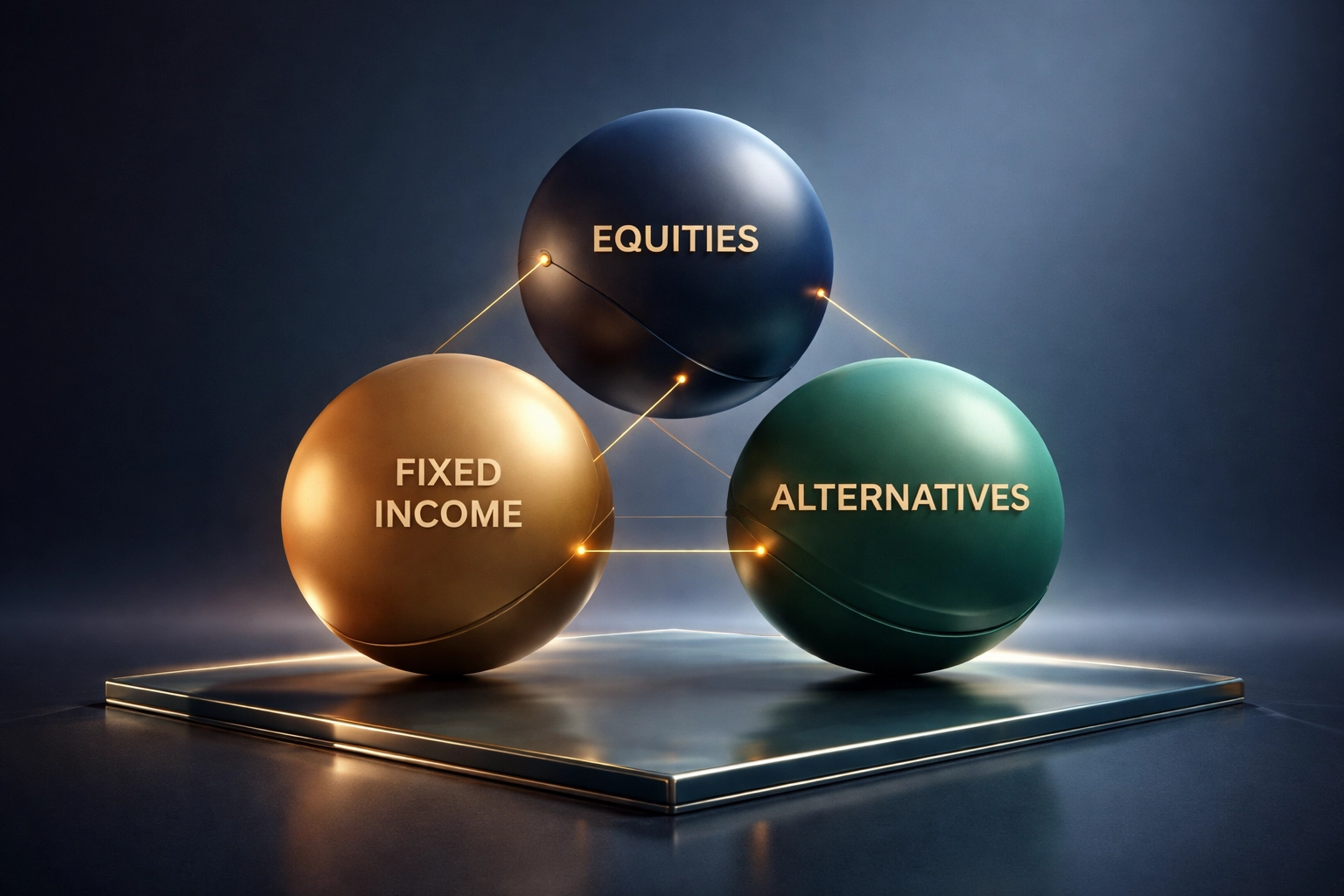
The 40/30/30 portfolio allocates your investments across three buckets:
40% Public Equities – Stocks remain your primary growth engine
30% Fixed Income – Bonds still provide stability and income
30% Alternative Investments – This is where things get interesting
That 30% alternatives allocation is the game-changer. We're talking about private equity, private credit, real estate syndications, infrastructure, and yes: even institutional-grade crypto and digital assets.
This isn't some fringe theory. Major institutions like pension funds, endowments, and family offices have been running portfolios with 40%+ in alternatives for years. The 40/30/30 model essentially democratizes that approach for accredited investors.
Why the 60/40 Model Is Showing Its Age
Let's be honest about what's happened to the traditional portfolio approach.
The whole point of the 60/40 split was diversification. When stocks dropped, bonds were supposed to provide a cushion. For decades, this inverse correlation held up reasonably well.
Then came the 2020s.
We've seen multiple periods where both stocks and bonds fell simultaneously. The diversification benefit that made 60/40 portfolios effective? It evaporated right when investors needed it most.
Add in sticky inflation that erodes fixed-income returns and equity valuations that remain stretched by historical standards, and you've got a recipe for disappointing risk-adjusted returns.
The 40/30/30 model addresses these challenges head-on by introducing asset classes that operate with lower correlation to traditional markets.
Breaking Down the Three Pillars
Equities (40%)
Stocks aren't going anywhere in this model. They're still your primary source of long-term growth and capital appreciation.
But notice that the allocation is reduced from the traditional 60%. This isn't about being bearish on equities: it's about managing overall portfolio volatility while freeing up capital for assets with different return drivers.
For 2026, most institutional guidance suggests a neutral to modest overweight position in equities relative to this 40% baseline, depending on your risk tolerance and time horizon.
Fixed Income (30%)
Bonds still have a role to play. They provide stability, income, and can serve as dry powder during market dislocations.
That said, the reduced allocation from 40% reflects the reality that fixed income's defensive characteristics have been compromised in recent years. With inflation still a concern and rate policy uncertain, bonds aren't the bulletproof hedge they once were.
Current positioning guidance suggests neutral to modest overweight relative to the 30% base allocation, particularly in higher-quality credits and shorter-duration instruments.

Alternative Investments (30%)
This is where the 40/30/30 model really differentiates itself.
Alternative investments span a wide range of asset classes:
Private Equity: Direct ownership stakes in private companies
Private Credit: Lending to companies outside traditional banking channels
Real Estate Syndications: Pooled investments in commercial and residential properties
Infrastructure: Airports, toll roads, renewable energy projects
Digital Assets: Institutional-grade Bitcoin and crypto allocations
Hedge Funds: Strategies designed to generate returns uncorrelated to markets
The key benefit? These assets often move independently of stocks and bonds. When public markets are getting crushed, your private credit investments might be humming along just fine. When inflation spikes, your real estate holdings with inflation-adjustment clauses built into leases can actually benefit.
The Numbers Don't Lie
Research from major institutions backs up the 40/30/30 approach.
J.P. Morgan found that adding just a 25% allocation to alternatives can enhance traditional 60/40 returns by 60 basis points. That might not sound like much, but on a projected 7% return, that's an 8.5% improvement in your portfolio's performance.
KKR's research went even further, finding that the 40/30/30 model outperformed the traditional 60/40 across all studied timeframes.
The diversification benefits extend beyond just spreading your money around. Alternative assets provide natural inflation hedges that stocks and bonds simply can't match. Infrastructure projects and real estate often have inflation-adjustment mechanisms built directly into their contracts. That's incredibly valuable in an environment where inflation remains stubbornly above central bank targets.
Why 2026 Is the Year to Consider This Approach
Several factors make the 40/30/30 model particularly relevant right now.
Persistent Policy Uncertainty: Central banks globally are navigating tricky terrain. Rate decisions remain difficult to predict, creating volatility in traditional asset classes.
Geopolitical Risk: From ongoing regional conflicts to trade tensions, the global landscape remains unsettled. Alternative assets can provide insulation from geopolitical shocks that ripple through public markets.
Correlation Concerns: The breakdown in stock-bond diversification isn't a temporary blip. Structural factors suggest this may be the new normal.
Access Has Improved: Less than a decade ago, getting into private markets required minimum investments north of $500,000. Today, accredited investors can access institutional-quality alternatives with significantly lower minimums.

Implementation Considerations
Moving to a 40/30/30 allocation isn't as simple as clicking a few buttons in your brokerage account. Here's what you need to think about:
Liquidity Profile
Alternative investments are generally less liquid than public stocks and bonds. You can't sell a private equity stake as easily as you can dump some shares of Apple. This isn't a bug: it's a feature. The illiquidity premium is part of what drives returns.
But it means you need a patient, long-term investment horizon. Don't put money into alternatives that you might need to access in the next few years.
Quality and Diversification Within Alternatives
Not all alternatives are created equal. The 30% allocation should be diversified across multiple asset types with different risk profiles and return drivers.
A portfolio that's 30% in a single real estate syndication is very different from one spread across private credit, infrastructure, real estate, and digital assets.
Active Management Requirements
Let's be real: the 40/30/30 portfolio is more complex than a simple 60/40 approach. Rebalancing is more involved. Due diligence on alternative investments requires more effort. This is where working with experienced managers becomes valuable.
Digital Asset Integration
For accredited investors comfortable with the space, institutional-grade crypto allocation can be part of that alternatives bucket. Bitcoin in particular has shown low correlation to traditional assets over longer time horizons, making it a potential diversification tool.
The key word is "institutional-grade." This means proper custody solutions, regulatory compliance, and risk management: not gambling on meme coins.
Making It Work for Your Portfolio
The 40/30/30 model isn't a one-size-fits-all solution. Your specific allocation should reflect your risk tolerance, time horizon, liquidity needs, and investment goals.
But the underlying principle: that a significant allocation to alternatives can improve diversification and returns in today's market environment: is sound. It's what institutions have been doing for years, and it's increasingly accessible to individual accredited investors.
At Mogul Strategies, we specialize in helping accredited investors build portfolios that blend traditional assets with innovative strategies, including institutional-grade digital asset integration. If you're interested in exploring how the 40/30/30 model might work for your situation, we'd love to talk.
The 60/40 portfolio had a good run. But in 2026, it's time for something better.
Comments