The Proven Framework for Long-Term Wealth Preservation: Crypto, Real Estate & Beyond
- Technical Support
.png/v1/fill/w_320,h_320/file.jpg)
- 3 days ago
- 5 min read
Wealth preservation isn't about picking the hottest investment trend and going all-in. It's about building a resilient framework that protects what you've built while positioning yourself for sustainable growth: regardless of market conditions.
If you're an accredited or institutional investor, you already know the basics. But in 2026, the game has evolved. The intersection of traditional assets and digital strategies isn't just interesting: it's essential. Here's how to build a framework that actually works.
The Foundation: Strategic Diversification That Makes Sense
Let's start with something that sounds boring but will save your portfolio: real diversification.
This isn't about owning 50 different stocks or throwing money at whatever your buddy recommended. True diversification means spreading your capital across asset classes that respond differently to market conditions. When one underperforms, others compensate.
The sweet spot for many sophisticated investors is a balanced approach: traditional assets (stocks, bonds), real assets (real estate, commodities), and alternative investments (crypto, private equity). The exact allocation depends on your risk tolerance, time horizon, and liquidity needs: but the principle remains constant.

Think of it this way: you're building a portfolio that can weather storms you can't even predict yet. Inflation spike? Your real estate and commodities hedge that. Market crash? Your fixed income and cash positions cushion the fall. Currency debasement? Your Bitcoin allocation starts looking pretty smart.
Real Estate: The Anchor Asset
Real estate remains one of the most reliable wealth preservation vehicles, but how you access it matters.
Direct property ownership works for some, but real estate syndication offers institutional-grade opportunities without the operational headaches. You get exposure to commercial properties, multifamily developments, or specialized real estate projects that would be inaccessible individually.
The benefits stack up: regular cash flow, tax advantages through depreciation, inflation hedge through property appreciation, and portfolio diversification beyond paper assets. Plus, real estate generally has low correlation with stock market movements: exactly what you want in a preservation-focused portfolio.
Look for syndications with experienced operators, strong track records, and clear exit strategies. The best deals often come through established networks, not public listings.
Crypto Integration: Beyond the Hype
Let's address the elephant in the room: cryptocurrency.
By 2026, the "is crypto legitimate?" debate is largely settled among institutional investors. The question now is how much and which approach makes sense for wealth preservation.

Bitcoin has proven itself as digital gold: a scarce, decentralized store of value that operates independently of any government or central bank. For wealth preservation, a modest allocation (typically 5-15% depending on your risk profile) provides asymmetric upside potential and protection against monetary debasement.
But institutional-grade crypto integration isn't about buying meme coins or chasing 100x returns. It's about:
Working with regulated custodians who maintain proper security protocols
Understanding tax implications and reporting requirements
Sizing positions appropriately within your overall framework
Viewing crypto as a long-term allocation, not a trading vehicle
The key is treating crypto like any other serious investment: do your due diligence, understand the risks, and integrate it thoughtfully into your broader strategy.
The Tax Efficiency Layer
Here's where sophisticated investors separate themselves from the pack: tax planning isn't something you do once a year in April. It's an ongoing strategy woven throughout your wealth preservation framework.
Tax-deferred accounts like self-directed IRAs can hold alternative investments including real estate and crypto. Tax-loss harvesting systematically captures losses to offset gains. Roth conversions during low-income years set you up for tax-free withdrawals later.
For business owners and high earners, the opportunities multiply: defined benefit plans, cost segregation studies on real estate, qualified opportunity zones, and strategic entity structuring all play a role.

The goal is simple: keep more of what you earn and minimize the government's cut legally and ethically. Every dollar saved in taxes is a dollar that stays working in your portfolio.
Risk Management: Insurance and Protection
Wealth preservation isn't just about growing assets: it's about protecting what you have.
A comprehensive insurance strategy includes life insurance to provide for heirs and cover estate taxes, umbrella liability coverage to protect against lawsuits, and long-term care insurance to prevent healthcare costs from depleting your assets.
For business owners, key person insurance and buy-sell agreements funded with life insurance ensure business continuity. Disability insurance protects your most valuable asset: your ability to earn income.
Beyond insurance, maintaining adequate liquidity (typically 6-24 months of expenses) prevents forced selling during market downturns. This cash cushion lets you weather storms without disrupting your long-term positions.
Estate Planning: Protecting Your Legacy
If you've built significant wealth, estate planning moves from optional to essential.
Basic documents: wills, powers of attorney, healthcare directives: are just the starting point. Trusts offer powerful advantages: probate avoidance, privacy, creditor protection, and control over how and when assets transfer to beneficiaries.
For larger estates, strategies like family limited partnerships, grantor retained annuity trusts (GRATs), and charitable remainder trusts can minimize estate taxes while achieving your legacy goals.
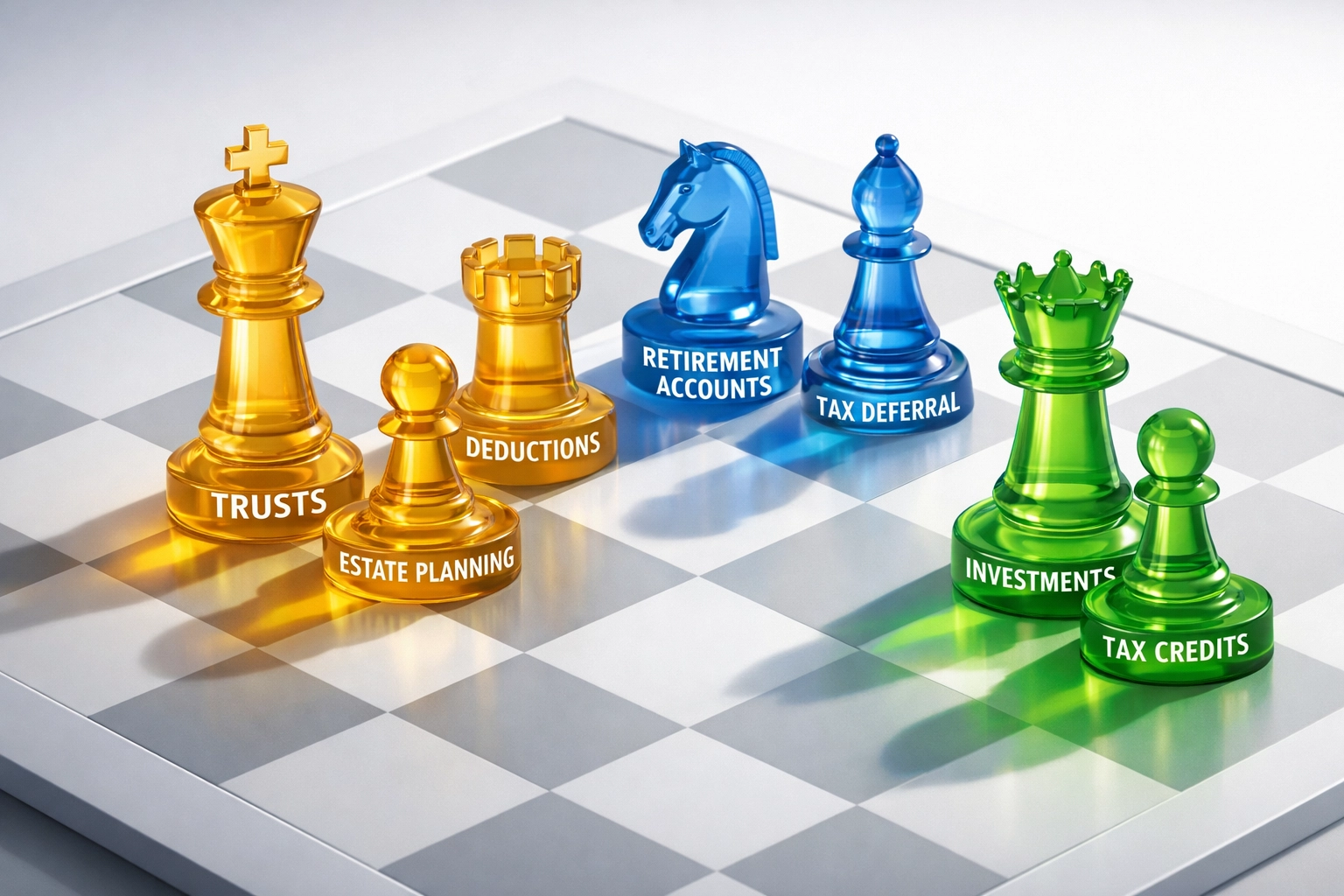
The right structure depends on your specific situation, but the common thread is proactive planning. Waiting until a crisis hits leaves your heirs with expensive problems and limited options.
Building Your All-Weather Portfolio
The most resilient portfolios aren't optimized for one scenario: they're designed to perform reasonably well across various economic conditions.
This "all-weather" approach means holding assets that thrive in different environments:
Stocks for growth periods
Bonds for deflationary times
Real estate and commodities for inflation
Cash for liquidity and opportunity
Crypto for monetary debasement protection
The specific allocation varies based on your circumstances, but the framework provides stability regardless of which way the economic winds blow.
The Ongoing Process
Here's the truth about wealth preservation: it's not a one-time setup. Markets evolve. Tax laws change. Your personal situation shifts.
Successful wealth preservation requires regular reviews (at minimum annually, ideally quarterly) to rebalance your portfolio, harvest tax losses, adjust for life changes, and ensure your strategy remains aligned with current conditions.
Stay informed about economic indicators: inflation rates, employment trends, GDP growth: but avoid knee-jerk reactions to every headline. The goal is thoughtful adjustment, not panicked trading.
Many sophisticated investors work with wealth advisors who specialize in alternative investments and complex planning. The right professional brings expertise across multiple domains: traditional assets, real estate, crypto, tax strategy, and estate planning: creating a cohesive approach rather than disconnected tactics.
Moving Forward
Building a proven framework for long-term wealth preservation isn't about complexity for its own sake. It's about creating a resilient structure that protects your capital, generates sustainable returns, and positions you for opportunity regardless of market conditions.
The integration of traditional assets like real estate with innovative strategies like institutional-grade crypto allocation represents the evolution of sophisticated wealth management. Those who adapt to this new reality: thoughtfully and strategically: will be best positioned to preserve and grow wealth over the long term.
The question isn't whether to build this framework. It's whether you'll act now or wait until market conditions force your hand.
Comments