The Proven Institutional Alternative Investments Framework: How to Blend Private Equity, Real Estate, and Crypto
- Technical Support
.png/v1/fill/w_320,h_320/file.jpg)
- Feb 11
- 5 min read
The institutional playbook for alternative investments hasn't changed much in twenty years. Private equity, real estate, infrastructure, rinse and repeat. But here's the thing: we're in 2026, and the investment landscape looks nothing like it did even five years ago.
If you're still using the same allocation framework your predecessors built in 2010, you're leaving serious returns on the table. More importantly, you're missing the diversification benefits that come from integrating digital assets into a truly modern alternative portfolio.
Let's talk about how to actually do this right.
The Traditional Institutional Framework (And Why It's Incomplete)
Most institutional investors operate on a three-pillar framework that's served them reasonably well:
Pillar 1: Integrated Modeling , Building models that connect standard and alternative assets based on macro factors like growth, interest rates, and inflation.
Pillar 2: Cross-Asset Diversification , Spreading capital across private equity, private debt, real estate, and infrastructure to balance returns with liquidity needs.
Pillar 3: Intra-Asset Diversification , Within each class, you diversify further. Private equity might include venture capital, LBOs, mezzanine financing, and sector-specific funds.
This framework typically allocates 20-30% of institutional capital to alternatives, up from single digits historically. It works. But it's incomplete.

The missing piece? Digital assets. Specifically, Bitcoin and select cryptocurrencies that now have the institutional infrastructure, regulatory clarity, and market depth to warrant serious consideration.
Why Crypto Belongs in Your Alternative Allocation Now
Let's address the elephant in the room: crypto isn't some speculative sideshow anymore. By 2026, we've seen Bitcoin ETFs manage billions, major financial institutions offer custody solutions, and regulatory frameworks (finally) provide clarity.
More importantly, crypto offers something traditional alternatives can't match: true non-correlation with both public equities and traditional alternative assets.
Private equity correlates with equity markets (duh: you're buying companies). Real estate has ties to interest rates and economic cycles. Even infrastructure investments move with GDP growth. But Bitcoin? Its price drivers are fundamentally different: monetary policy concerns, adoption curves, technological innovation, and macro hedging demand.
That's not theory. That's portfolio construction gold.
Here's what the data shows: during periods of traditional market stress in 2024-2025, Bitcoin behaved differently than both stocks and private market assets. Not always inversely, but differently. That difference is what creates genuine diversification.
The Updated Framework: Three Assets, One Strategy
So how do you actually blend private equity, real estate, and crypto in an institutional portfolio? Let's break it down.

Start with Your Foundation: Real Estate and Private Equity
Your base allocation should still lean on proven alternative assets:
Real Estate (30-40% of alternative allocation) : This remains your stability anchor. Focus on diversification across property types, geographies, and risk profiles. Core assets for income, value-add for growth, and opportunistic plays for outsized returns. Real estate syndications offer particularly attractive risk-adjusted returns when structured properly.
Private Equity (40-50% of alternative allocation) : This is your growth engine. Spread across vintage years, fund managers, and strategies. Include venture capital for moonshot potential, growth equity for scaling businesses, and buyouts for stable cash flow. The key is avoiding concentration risk while maintaining conviction in top-tier managers.
Add the Modifier: Crypto Integration
Here's where it gets interesting. Crypto shouldn't dominate your alternative allocation: it should enhance it.
Crypto/Digital Assets (10-20% of alternative allocation) : Think of this as your non-correlation amplifier and potential asymmetric upside. But be strategic:
Bitcoin (60-70% of crypto allocation) : The institutional-grade digital asset with the deepest liquidity and clearest value proposition as digital gold.
Ethereum (20-30% of crypto allocation) : The smart contract platform with real utility driving the decentralized finance ecosystem.
Selective alts (10% max) : Only for investors with expertise and conviction in specific protocols.
This means if you're allocating 25% of your total portfolio to alternatives, you might have:
7.5-10% in real estate
10-12.5% in private equity
2.5-5% in crypto/digital assets

The 40/30/30 Alternative Model for Growth-Oriented Portfolios
For investors with longer time horizons and higher risk tolerance, consider the 40/30/30 alternative framework:
40% Private Equity : Emphasizing venture capital and growth equity for maximum upside
30% Real Estate : Weighted toward value-add and opportunistic strategies
30% Digital Assets : Including Bitcoin, Ethereum, and tokenized real estate or private equity
This aggressive model works for family offices, endowments with 50+ year horizons, and investors who can handle illiquidity and volatility. The key is having the operational sophistication to manage three distinct asset classes simultaneously.
Risk Mitigation and Liquidity Planning
Blending these three asset classes creates unique challenges you need to address upfront.
Liquidity Layering : Private equity and real estate are illiquid by nature. Crypto is highly liquid but volatile. Use crypto as your portfolio's liquidity buffer for rebalancing opportunities. When private market NAVs are written up but you can't access the gains, crypto gives you a liquid alternative asset to manage exposures.
Left-Tail Risk Management : Model scenarios where all three asset classes face stress simultaneously. What happens if we hit a recession (hurting private equity), rising rates (pressuring real estate), AND crypto markets correct 50%? Your total portfolio should survive this scenario without forced liquidations.
Correlation Monitoring : The whole point of this framework is diversification. Track rolling correlations quarterly. If crypto starts moving in lockstep with private equity valuations, you've lost the diversification benefit and should reconsider allocations.

Operational Considerations That Matter
Theory is easy. Execution is hard. Here's what actually matters when implementing this framework:
Custody and Security : You can't hold Bitcoin in your prime broker account. You need institutional-grade custody solutions, multi-signature security, and proper insurance. This isn't optional.
Valuation Timing : Private markets report quarterly at best. Crypto prices update every second. Resist the urge to rebalance based on crypto volatility alone. Set rules-based rebalancing thresholds and stick to them.
Tax Efficiency : Crypto generates taxable events more frequently than private equity. Structure crypto positions through tax-advantaged entities where possible, and coordinate with private market harvesting opportunities.
Manager Selection : In private equity and real estate, manager selection drives returns. In crypto, direct indexing often beats active management. Adjust your approach accordingly: pay up for great private market managers, keep crypto exposure low-cost.
The Real Edge: Integration, Not Addition
Here's what separates sophisticated institutional portfolios from everyone else: true integration rather than simple addition.
Don't just add crypto as a separate 3% allocation and call it a day. Think about how these assets interact:
Use crypto gains to fund private equity capital calls
Consider tokenized real estate exposure to blend traditional and digital real estate
Look for private equity managers investing in blockchain infrastructure companies
Explore opportunities where all three asset classes intersect (like Bitcoin mining operations backed by renewable energy infrastructure)
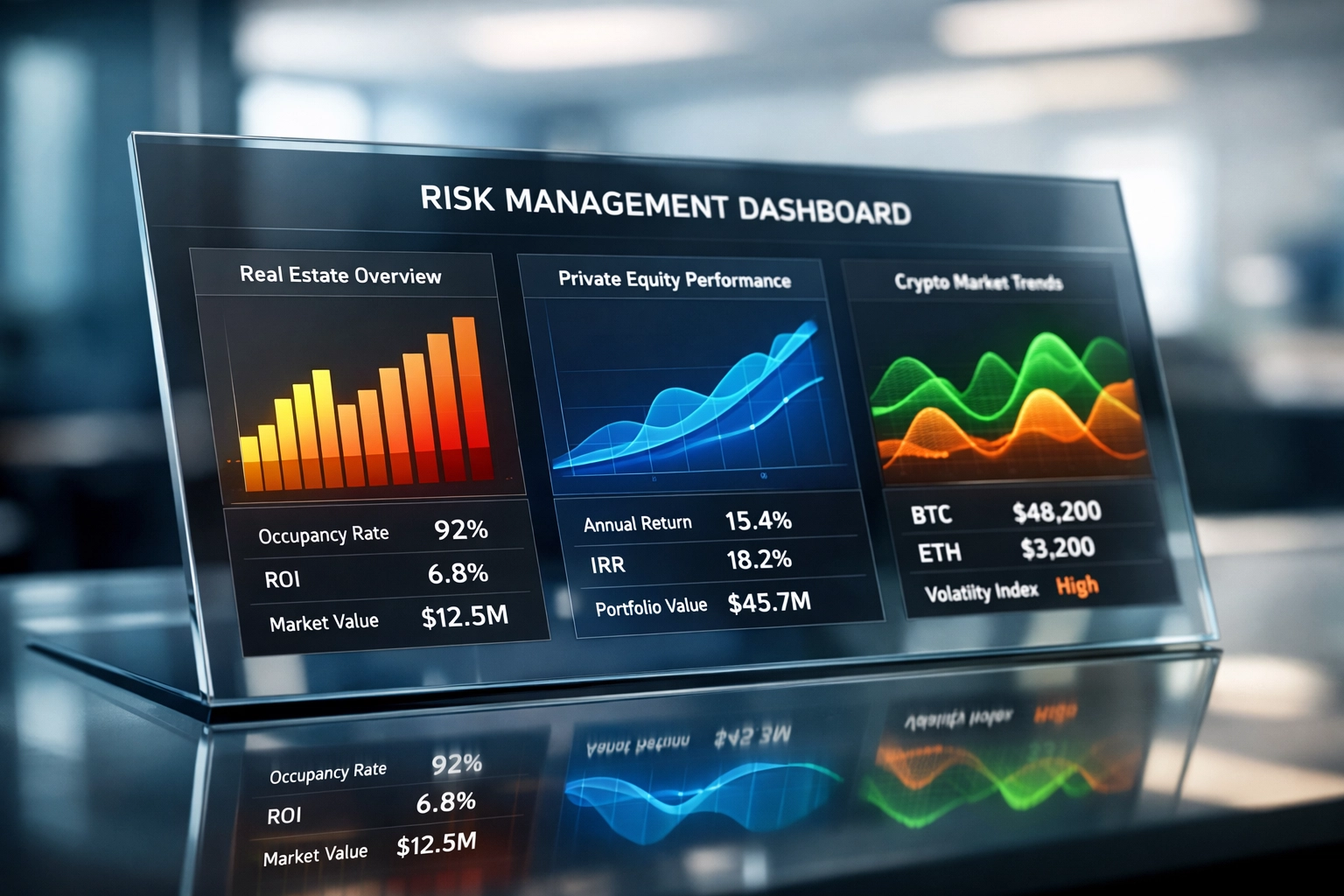
This integrated approach creates a portfolio greater than the sum of its parts. You're not just diversified: you're positioned to capture returns across the entire spectrum of growth opportunities in modern markets.
Making It Work in Practice
The institutional alternative investment framework isn't rocket science, but it does require discipline, expertise, and the willingness to evolve beyond traditional approaches.
Private equity gives you operating leverage and growth. Real estate provides income and inflation protection. Crypto offers non-correlation and asymmetric upside. Blend them thoughtfully, manage the risks actively, and you build a portfolio positioned for the next decade, not the last one.
At Mogul Strategies, we're helping institutional and accredited investors navigate exactly these opportunities: building portfolios that respect traditional alternative investment wisdom while integrating the digital assets that define modern wealth creation.
The framework exists. The infrastructure is ready. The question is whether you're willing to update your approach for 2026 and beyond.
Comments