Bitcoin Integration Asset Management: 5 Steps How to Add Digital Assets to Institutional Portfolios (Easy Guide for Accredited Investors)
- Technical Support
.png/v1/fill/w_320,h_320/file.jpg)
- Jan 30
- 5 min read
Let's be real: Bitcoin isn't just for tech bros and Reddit traders anymore. Institutional investors and accredited individuals are increasingly asking the same question: "How do we actually add digital assets to our portfolios without losing sleep at night?"
If you're managing serious capital, you can't just download Coinbase and start buying Bitcoin like you're picking up groceries. You need a structured approach that balances opportunity with the kind of risk management your board (or your financial advisor) can actually sign off on.
Here's your straightforward guide to integrating Bitcoin and digital assets into institutional portfolios. No hype, no complexity: just five practical steps.
Step 1: Define Your Financial Objectives and Risk Tolerance
Before you buy a single satoshi, get crystal clear on why you're doing this.
Are you looking to enhance portfolio returns? Diversify away from traditional correlations? Gain exposure to a new asset class that's reshaping global finance? Each objective requires a different approach.
Your investment goals need to align with your organization's broader financial strategy. If you're a family office looking for long-term wealth preservation, your Bitcoin strategy will look very different from a hedge fund seeking short-term alpha.

The volatility conversation you can't skip:
Bitcoin can swing 20% in a week. Sometimes more. Your institution needs to understand exactly how much price fluctuation it can handle without triggering panic or forced liquidations. This isn't about being conservative or aggressive: it's about being honest.
Run scenarios. What happens if Bitcoin drops 40% in six months? What if it doubles? How does that impact your overall portfolio? These aren't hypotheticals: they're planning essentials.
This clarity upfront determines everything else: how much you allocate, which assets you choose, and how you structure your entry and exit strategies.
Step 2: Select Your Portfolio Allocation Strategy
Now for the numbers.
The most common question we hear: "How much Bitcoin should we actually hold?"
There's no one-size-fits-all answer, but institutional investors often start with 1-5% allocations to digital assets. Conservative institutions begin at the lower end; those with higher risk tolerance might push toward 10% or more.
One proven framework is the 60/30/10 Core-Satellite Model:
60% Core Holdings: Bitcoin and Ethereum: the established leaders with the deepest liquidity
30% Satellite Positions: DeFi protocols, Layer 1/Layer 2 solutions, real-world asset tokenization projects
10% Stability Buffer: Stablecoins or yield-generating instruments for liquidity and tactical opportunities
This structure mirrors traditional institutional portfolio design: a stable core, growth satellites, and a liquidity cushion. It's familiar territory, just applied to a new asset class.

The key is matching your allocation to your objectives from Step 1. Looking for pure exposure? Weight heavily toward the core. Want to capture emerging opportunities? Increase your satellite allocation.
Whatever you choose, document your rationale. When Bitcoin drops (and it will), you'll need that written strategy to avoid emotional decision-making.
Step 3: Establish Institutional-Grade Custody and Infrastructure
Here's where most retail approaches fall apart: and where institutional investors have a massive advantage.
You're not storing your Bitcoin on a hardware wallet in a desk drawer. You need institutional-grade custody that meets the same standards as your other holdings.
What to look for in a custodian:
Robust insurance coverage
SOC 2 Type II compliance
Integration with multiple execution venues (centralized exchanges, OTC desks, DeFi protocols)
Real-time portfolio dashboards
Transparent, audit-ready reporting
Multi-signature security protocols
Your infrastructure needs to connect custody with execution seamlessly. That means working with providers who understand institutional workflows, not consumer apps dressed up with a corporate logo.

Think about reporting requirements too. Your CFO needs clean data for board presentations. Your auditors need transaction records that meet their standards. Your compliance team needs real-time monitoring capabilities.
The right infrastructure makes Bitcoin feel like any other portfolio position: not a separate, mysterious silo that requires special handling.
Step 4: Implement Comprehensive Security and Compliance Protocols
Security in crypto isn't just about not losing your private keys (though that's important too).
You need multiple layers of protection:
Technical security:
Cryptographic protections for all transactions
Private key management systems with redundancy
Regular security audits by third-party firms
Cold storage for assets not actively traded
Multi-signature requirements for large transfers
Operational security:
Defined custody procedures with clear responsibilities
Access controls and approval workflows
Regular security training for team members
Incident response protocols
Regulatory compliance:
Transaction recording and documentation
Tax reporting structures
AML/KYC procedures for counterparties
Regulatory filing requirements specific to your jurisdiction
The compliance piece is evolving rapidly. What's required today might expand tomorrow. Build systems that can adapt as regulations mature, rather than retrofitting later.
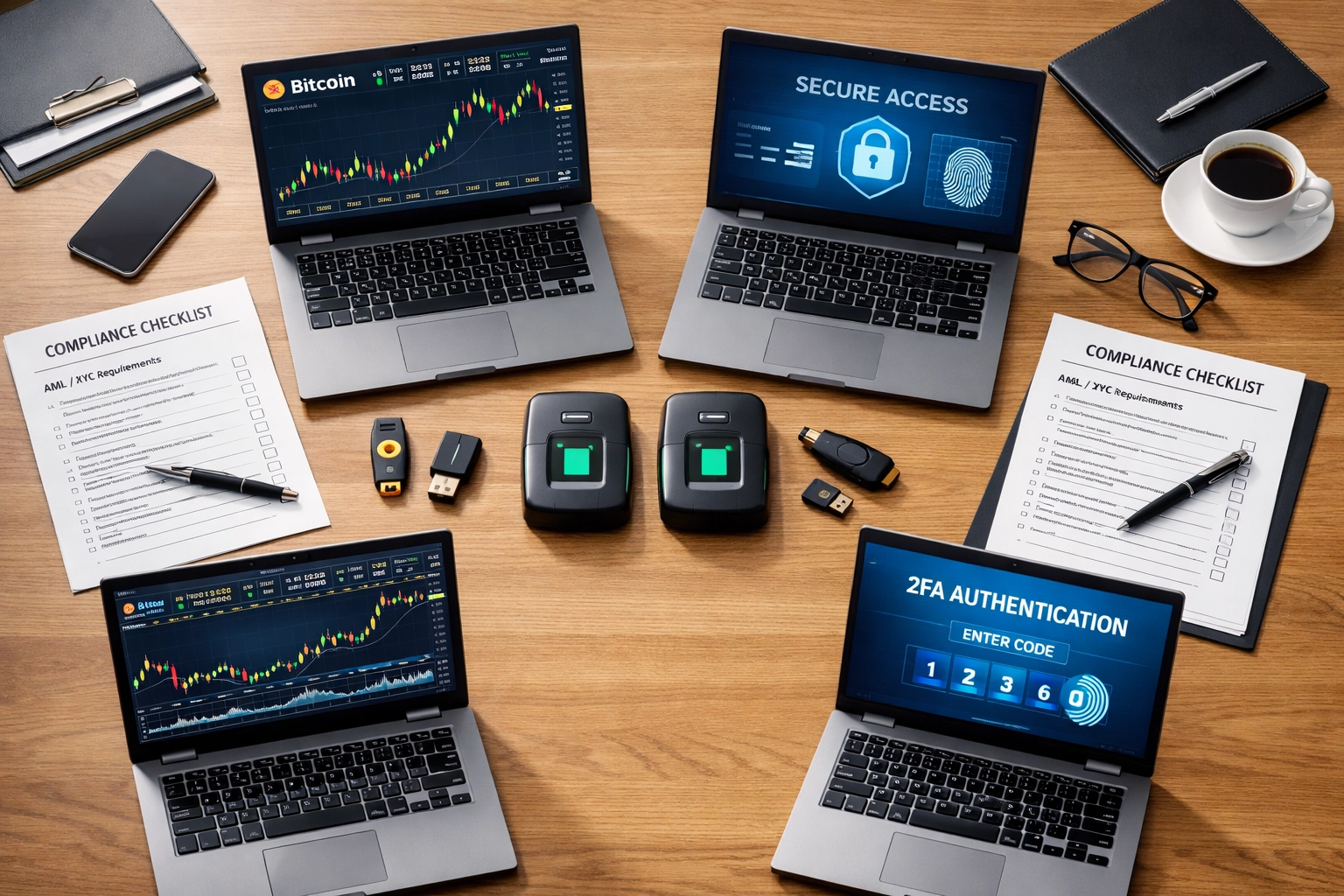
Some institutions handle this internally. Others partner with specialized treasury management services that understand digital asset compliance. There's no wrong answer: just different trade-offs between control and expertise.
Step 5: Create a Structured Review and Rebalancing Schedule
Your digital asset allocation isn't "set it and forget it."
Establish a regular review calendar: monthly for active strategies, quarterly for more passive approaches. During these reviews, you're checking:
Performance against benchmarks (both crypto-specific and traditional)
Drift from target allocations
Changes in market conditions
Evolution of your institution's objectives
New opportunities or risks in the digital asset landscape
Rebalancing matters more in crypto than in traditional portfolios. Bitcoin can move from 3% to 6% of your portfolio in weeks: not because you bought more, but because it doubled in value.
Define your rebalancing triggers ahead of time. Maybe you rebalance when any position drifts more than 20% from its target. Maybe you do it calendar-based regardless of drift. Just have a system.
This ongoing management keeps your digital asset exposure aligned with your risk tolerance and financial goals. It also creates natural discipline: taking profits when assets surge, adding when they dip.
Making It Work in Practice
Integrating Bitcoin into institutional portfolios isn't exotic anymore. Major pension funds, endowments, and family offices have already made the move. The institutions finding success are those that treat digital assets like any other portfolio position: with clear objectives, robust infrastructure, and disciplined management.
The opportunity is significant. Bitcoin and digital assets offer exposure to an asset class with low correlation to traditional holdings, potential for substantial returns, and growing institutional acceptance.
But that opportunity only materializes when you approach it professionally. Skip the infrastructure building, ignore the compliance requirements, or allocate based on FOMO rather than strategy, and you're setting up for problems.
At Mogul Strategies, we've seen what works: and what doesn't: as institutional investors navigate digital asset integration. The organizations succeeding are those following structured approaches like the five steps above, not those chasing headlines.
Ready to explore how digital assets might fit your institutional portfolio? The framework is clear. The infrastructure exists. What you do next is up to you.
Comments