The Accredited Investor's Guide to the 40/30/30 Diversified Portfolio Model in 2026
- Technical Support
.png/v1/fill/w_320,h_320/file.jpg)
- Jan 30
- 5 min read
If you've been investing for any length of time, you've probably heard about the classic 60/40 portfolio. Sixty percent stocks, forty percent bonds. Simple. Reliable. The gold standard for decades.
But here's the thing: 2026 isn't 1996. Markets have evolved. Correlations have shifted. And that trusty 60/40 split? It's showing its age.
Enter the 40/30/30 model, a modernized framework that's gaining serious traction among accredited investors who want better risk-adjusted returns without gambling their portfolios on a single asset class.
Let's break down what this model looks like, why it works, and how you can put it to work for your wealth.
What Exactly Is the 40/30/30 Portfolio?
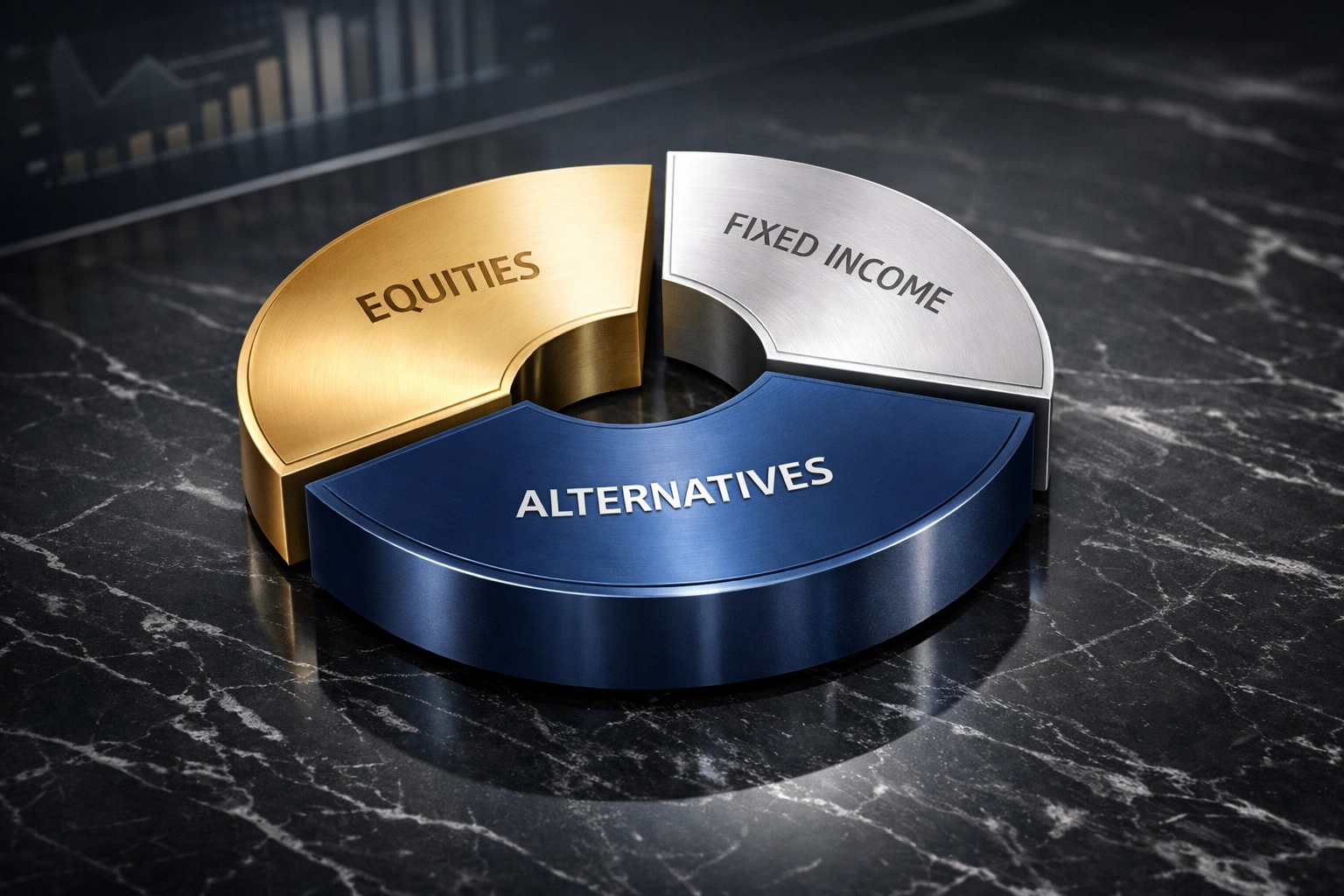
The 40/30/30 portfolio allocates your investments across three buckets:
40% Public Equities – Stocks, ETFs, and other publicly traded securities
30% Fixed Income – Bonds, treasuries, and other debt instruments
30% Alternative Investments – Private equity, real estate, hedge funds, infrastructure, and yes, even digital assets like Bitcoin
The core idea is straightforward: reduce your reliance on the traditional stock-bond relationship by introducing a meaningful allocation to alternatives. These assets often move independently of public markets, which can smooth out your returns over time.
Why the 60/40 Model Is Running Out of Steam
For decades, the 60/40 portfolio worked because stocks and bonds generally moved in opposite directions. When stocks tanked, bonds held steady (or even rallied). That negative correlation was the secret sauce.
But that relationship has broken down.
The Correlation Problem
In recent years: especially during market stress: stocks and bonds have increasingly moved together. During the 2008 financial crisis and the 2020 pandemic crash, both asset classes dropped simultaneously. So much for diversification.
The Yield Problem
Bonds just don't pack the punch they used to. After years of compressed yields and rising interest rates, fixed income returns have shrunk. You're taking on duration risk without getting properly compensated.
The Volatility Problem
Geopolitical tensions, inflation swings, and policy uncertainty have made traditional portfolios more vulnerable. The 60/40 model lost over 30% during some of the worst drawdowns in recent memory: hardly the "safe" approach many investors expected.
The bottom line: if you're still running a pure 60/40 split, you might be taking more risk than you realize while leaving returns on the table.
The Numbers Behind 40/30/30
This isn't just theory. The data backs it up.
Research from Candriam shows that replacing 30% of a traditional 60/40 portfolio with alternative assets improves the Sharpe ratio by 40%. Translation: you're getting significantly better risk-adjusted returns.
J.P. Morgan's analysis found that adding a 25% allocation to alternatives can boost projected returns by 60 basis points. On a portfolio expecting 7% annual returns, that's an 8.5% improvement: not insignificant over a 20-year horizon.
KKR's research confirms that the 40/30/30 model outperformed the 60/40 across virtually all timeframes studied.
The takeaway? This isn't a marginal upgrade. It's a meaningful improvement in how your portfolio handles both upside capture and downside protection.

Understanding Alternatives: Not All Are Created Equal
Here's where a lot of investors get tripped up. They hear "alternatives" and think it's one big category. It's not.
Alternative investments serve different purposes in your portfolio, and understanding those roles is crucial for building something that actually works.
The Three Functional Roles of Alternatives
1. Downside Protection Some alternatives are designed to hedge against market declines. Think managed futures, certain hedge fund strategies, or tail-risk hedging vehicles. These positions exist to soften the blow when everything else is falling.
2. Uncorrelated Returns Other alternatives generate returns that simply don't move with stocks or bonds. Private credit, litigation finance, and certain real asset strategies fall into this bucket. They add genuine diversification: not just the illusion of it.
3. Upside Capture Finally, some alternatives are positioned to benefit from market growth in ways public markets can't. Private equity, venture capital, and growth-oriented real estate can deliver outsized returns over long holding periods.
The key isn't to load up on "alternatives" as a generic category. It's to strategically select positions that fulfill specific roles in your portfolio.
What Alternatives Make Sense for Accredited Investors in 2026?
The good news: access to institutional-quality alternatives has never been better for accredited investors. New fund structures, investment platforms, and wealthtech innovations have dramatically lowered the barriers that used to keep these opportunities locked away.
Here's a quick look at the most relevant categories:
Private Equity
Access to private companies before they go public. Longer holding periods, but historically strong returns for patient capital.
Real Estate Syndications
Direct ownership stakes in commercial properties without the hassle of property management. Many deals now include inflation adjustment clauses, providing natural hedges against rising prices.
Private Credit
Lending to middle-market companies at rates well above traditional fixed income. Less liquid, but attractive yield premiums.
Infrastructure
Toll roads, energy assets, data centers. Long-term, stable cash flows with built-in inflation protection.
Digital Assets
Bitcoin and select crypto strategies are increasingly finding their way into institutional portfolios. When properly sized and managed, they can add uncorrelated upside potential.

How to Actually Implement the 40/30/30 Model
Theory is great, but execution matters. Here's how to think about putting this into practice.
Step 1: Audit Your Current Allocation
Before making changes, understand where you stand. What's your actual exposure to equities, fixed income, and alternatives? Many investors think they're diversified but are heavily concentrated in public markets.
Step 2: Define Your Alternative Allocation by Function
Don't just pick alternatives randomly. Decide how much of your 30% allocation should go toward downside protection, uncorrelated returns, and upside capture. This depends on your risk tolerance, time horizon, and market outlook.
Step 3: Embrace Dynamic Rebalancing
The 40/30/30 model isn't meant to be static. Economic conditions change. Interest rate environments shift. Geopolitical risks evolve. Your portfolio should adapt accordingly.
Review your allocations at least quarterly and adjust based on where we are in the market cycle. This isn't market timing: it's intelligent risk management.
Step 4: Work with Specialists
Alternatives require due diligence that goes beyond reading a prospectus. Manager selection, fee structures, liquidity terms, and underlying asset quality all matter enormously. Partnering with a firm that specializes in blending traditional and alternative strategies can save you from costly mistakes.
The Bottom Line
The 60/40 portfolio served investors well for a long time. But clinging to it in 2026 means ignoring decades of market evolution and missing out on better risk-adjusted returns.
The 40/30/30 model offers a smarter path forward: maintaining meaningful equity exposure, keeping fixed income in the mix, and adding a diversified sleeve of alternatives that actually do what diversification is supposed to do.
For accredited investors with longer time horizons and access to institutional-quality opportunities, this framework isn't just an option: it's increasingly becoming the standard.
At Mogul Strategies, we specialize in building portfolios that blend traditional assets with innovative strategies, including digital assets and private market opportunities. If you're ready to move beyond the 60/40 model and explore what modern diversification looks like, we'd love to talk.
Comments